Monday, December 3, 2018

Survival Mode: Post-Service Processing

Being back in the USA for almost a month has been a whirlwind. I have been to visit my adorable nephew; just call me "nene levu!" My dad got married again! I participated and presented at the American Music Therapy Conference in Dallas, Texas. I presented on using music therapy in the Peace Corps (I'll write another blog post about this: spoiler alert, there are no specifically music therapy jobs and you do not do clinical work in the Peace Corps) and the ethics of doing music therapy abroad.

Being at conference made me realize a few things...

1) I don't feel like an "American*"

I found that I identified more with the non-united states music therapists and others who had been overseas. It is an interesting juxtaposition... while I am a US citizen, I have felt more "Fijian" than a US Citizen for a while. I imagine it will take time to readjust to this idea. 

2) Peace Corps itself is a traumatic experience

I have enjoyed learning to live with less and learning to be in the moment, but somewhere along the way I forgot that the struggle for clean water, walking through town without being harassed and appropriately cooked food is not an average "American" struggle. Yes, you get used to it, but I have started to wonder if you can truly thrive while your basic necessities to life are constantly questioned (and I lived on the mainland!). Life threatening cyclones, constant illnesses, inhaling chemicals from burning garbage all the time, gender-based security issues and the ever changing adaptations to climate change can put one on the edge.  Do not get me wrong, I loved my experience. 

3) I have been in survival mode

Image result for the definition of thrive

In a way, I have thrived. I have grown vigorously. I have flourished... but that is within the context of struggling for basic necessities and safety. It is a beautiful thing learning to live on less. But it is extraordinarily difficult to reach self-actualization while struggling for the more basic needs of life. Not that this is unique to people living overseas in previously colonized countries; people in the US struggle for these things, but as a white, Midwestern, upper-middle class United States Citizen, I had never experienced these struggles before. As a therapist, this is extremely humbling. None of this dawned on me until I set foot into a music therapy conference session and realized that I could not play in beat with everyone else at a drum circle. I was not actively listening. My playing was forced. I was numb... and that opened a lot of emotions I did not necessarily want to process at a therapy conference. 

Monday, September 10, 2018

Third Year Anniversary

It's hard to believe that it's my third anniversary of being in Fiji. I've learned so much, struggled so much and endured times of seemingly endless happiness. Fiji is not all resorts and pretty water bottles. It's hard. There's a lot of hardships we endure as women in Fiji, but these are things Fijian women endure their entire lives. I've had my highest of highs and lowest of lows here. It is excruciatingly difficult to learn how to completely support yourself in hard times away from your support system. It is a humbling experience and one I have learned immensely from.
I've never before been singled out because of my skin color. I've never before not blended in. I've never had to try to fit into a culture that is like trying to put a square peg in a round hole. It doesn't always fit, it doesn't zip up...but you can force it if you need too. There are things I will never understand. I've learned not to lose myself in the process. I've learned more empathy for my friends of color than I could have ever imagined.
We become a patchwork version of ourselves over time. A little bit of before, a little bit of now, a little American, and a little Fijian. A little bit of everything and still unfinished. If you look hard enough, you can see the beginning. Some of the edges are a little raw...Some have been ripped apart...and some are sewn with golden threads. Some feel as though they've been renewed by fire.... and others by love. But the end product is stunningly beautiful. I wouldn't change if for the world.


Monday, September 3, 2018

"This is my Fight Song": Life as a PCVL

Thanks for your patience with my lack of updates on the blog! I firmly believe that no excuse is the best excuse, so in the spirit of candor... This just fell out of priority for a little while.

My community:

A lot has happened over the past year. I decided to stay in Fiji. Staying as a third year Volunteer in a new site placement is a lot like your first year in a lot of ways. I moved to a new community and have had the beautiful experience of getting to know the staff in the office as my community. I've realized that I don't know much about anything and that Volunteers often do not give the Peace Corps staff the credit they deserve. Obviously, it helps dating a local that is nearby. You are immediately drawn into that community as well. But, I lost my biggest support system here by way of my group. All except three Volunteers have gone home. Those who are here, are an incredible asset, but it was hard to go through that change again. I often think that the hardest part of Peace Corps is losing your support system and building a new one. I know now that I can do it, because I have already done it before. There's beauty in that.

My new community... The Peace Corps Staff!
My work:

Being a Peace Corps Volunteer Leader feels like one of the biggest ways to fast-track your career development skills. I have learned so much about sustainability and international development. I've been blessed to work with our grants coordinator and learn as much as possible from her. She is a queen! Being here this past year has left me with some powerful questions and thoughts over whether Fiji actually needs US citizens to empower it's citizens... Because the people that work in this office, could very easily run this program without us. It's caused a bit of an existential crisis for me... fundamentally wondering if you are truly needed.

I've worked with two different Directors of Programming and Training. I have learned so much from both. It has been great confirmation that it might be something that I look into in the future. It's been interesting to watch the staff transition in and out of jobs. The staff go through very similar cycles to Volunteers. I've learned a lot about resiliency, faking it until you make it, humility, and intrinsic motivation.

My incredible co-workers!
As PCVL, I work directly with programming staff, training staff and grants. I've done a lot of resource development, but often there's this concern in the back of your head that Volunteers are not actually going to utilize this resource that you've spent hours creating. Volunteers will often as for something, but then once it's released, it does not get used. At least that is how it appears to go...Being PCVL can be a very rewarding job, but there is also the struggle of doing a lot of work without the confirmation that you are on the right track. Are PCV's even using what I'm spending hours working on? Or is there a new thought of something we "should" be doing to help before we get confirmation that they approved of the last thing we did?

Asking the staff what they do when confronted with disgruntled Volunteers has helped me to realize that as long as I'm doing my job to the best of my abilities, I am already on the right path. And the Volunteers do always eventually confirm this, even when they may be annoyed at me for "telling it like it is" at the time, ha. You can't make everyone happy... I'm just going to keep being me and trying to be the best version of myself.

50th Anniversary:

We had our big 50th anniversary this year. I helped a lot with the planning of that and am thankful to have the experience. Just because I didn't enjoy every aspect of the experience, does not mean the experience was not valuable. You have to find the joy in your work and there is joy in reconnecting RCPVs with their host country... even if you realize most of the RPCVs are white and PC has had very little diversity until recently. Life is bittersweet. It was a fun event and I learned a ton about large events management, even if I was incredibly busy.
50th Anniversary Museum Event

Launching the 50th Anniversary Stamp Collection

Difficulties:

Living in the capital can be difficult. Budgeting is a lot harder when you have more options; although, I find living and cooking like you are in a village definitely helps. Safety is a lot harder because you don't have a network of people constantly watching over you. People don't know you, which can be annoying when it seems like 10 taxis have honked at you and everyone is saying Bula because they think you have money to spend... not because they like you or even know you.

--------------------------------------------------------------------------------------------------------

Overall, this year has had its trials. Staying for a third year has been difficult, but at this point you get used to the difficulties and the difficulties really do make the good times worth it. Sometimes I wonder if the life cycle of a Volunteer is just a normal life cycle. Does this happen in every job? Do you always lose your rose-colored glasses of the work? Can you continue to find joy in a job when you are struggling? I think the answer is yes. I've learned a lot of that from the local staff who have worked at Peace Corps for 15+ years. I love to ask them... why did you stay when it was hard and when you didn't get along with your supervisors? Their response is always that it's worth it.

As I look back on my posts from the first few years, some of it is cringe-inducing...But, the I sit and remember that's progress. That is personal development. It's becoming the best version of myself. Sometimes, I feel like Peace Corps is the crash course in becoming the best version of yourself, both professionally and personally. I've learned a lot of life lessons in a very short amount of time.

You get used to the fact that you can't actually change the world, you can just live your life to the best of your abilities and empower those around you to do the same. You live life as humbly as possible and try to pick up as many life lessons as you can along the way.

Monday, September 11, 2017

The Question I Never Thought I'd Answer

On the Fourth of July, I taught my classes about American history, American folk tales, and American music. The Fijian education system does the best they can, but often the students perception of world history is minimal. Although, you could say the same thing about American students. I've enjoyed learning about the Fijian government, Fijian history, British imperialism, British Colonization, and Fijian music. I thought it might be fun, to share some of these same parts of American history because my students often have never heard of things like the American Civil War, the mistreatment of Native Americans or the story of Paul Revere.

Imagine my surprise when at the end of class, one of my year nine (this is equivalent to US eighth grade) students asked me, "Madam, can you please tell us about 9/11."

I get asked all sorts of questions in class... teaching reproductive health has taught me to never be surprised at anything, but this shocked me. I was impressed! I realized I had made a snap judgement that these students know nothing about world history and I was completely wrong.


After I stood there for a few minutes processing the question, I began to share my story. Ironically, I was in eighth grade when 9/11 hit. My mother was supposed to be traveling. I remember they waited until the end of classes and I was in English. I even remember the lesson that we were being taught. I remember watching people fall out of buildings; I've realized over the years that they have edited this stuff out of the replays. I will never forget that feeling. I told them that my experience with 9/11 will probably be similar to their experience with Cyclone Winston. They'll never forget.

But, when explaining this I realized a few things. Just like everywhere else in the world, there are some prejudices between races and cultures. How do you explain the idea of "Islamic Terrorists," when they aren't technically even Islamic. Or even labeling them "Islamic Terrorists..." Am I reinforcing existing stereotypes? I made sure to explain that while, at the time, those were the words that were used, we know now, that those people are extremists. In the same cult-like status of Westboro Baptist and the KKK. This led to a great discussion on stereotypes and being careful with our words.

I also realized how thankful I am to my parents for not censoring that moment. I was only 13 years old. It was tragic and traumatic to view, but it was real. They did not sugar coat it and answered my questions.

If anyone out there teaches 13 and 14 year olds, then you know that sitting still and silently is an unimaginable feat for them... But they were silent. They listened. They did not tease me about my culture and they were very respectful. I realized that I can use a tragic and terrifying moment of American history to teach tolerance, acceptance and peace. I guess I shouldn't have been surprised that they were able to handle it, after all, they were the same age that I had been.

I think I may have gotten more out of that lesson than they did. We will never forget.

Saturday, August 19, 2017

Why Do Americans Kill Each Other?

There has been a few times over the course of my service when I get asked questions that make my skin crawl with embarrassment. It's so much worse when it is the children asking these questions. Things that I cannot justify, account for or offer a reasonable explanation for the behaviors of my fellow Americans. Here are a sample of the questions.

  • Why do Americans shoot each other?
  • Why do Americans hate each other so much?
  • How can your president not believe in climate change?
  • Why are Americans so fat and greedy?
  • Most Americans hate muslims, too? Right?
  • Why do people protest so much?
  • What do you think of Trump and why cannot Obama just be president again?
Most Fijian citizens have not been outside of Fiji, and often have never been outside of their own villages or corridor of their island. There is a long history of hatred between the Itaukei ethnicity (people who have lived in Fiji for a very long time) and Indo-Fijian ethnicity. The Indo-Fijians were typically brought over from India through indentured servitude during the times of colonialism. Most of the Itaukei race considers themselves to be Christian, while the Indo-Fijian race is much more diverse with people who are Christian, Hindi and Muslim. There is a lot of stereotyping and negative history between both ethnicity. There is also a lot of tolerance and love.

Fiji has around 900,000 people, whereas, the United States of America has a population of over 325 million. That is almost 325 times the size of Fiji. The entire country of Fiji is slightly smaller than New Jersey (http://www.nationmaster.com/country-info/stats/Geography/Area/Comparative). Fiji has no guns, with the major exception of the Army and Navy. The police do not even carry guns! There are villages in Fiji, literally being forced to move because of climate change. Their homes being washed away with the incoming and ever-rising ocean tides. In fact, there are entire islands of Fiji that are disappearing. So I can see how it is difficult to understand that there are people who do not believe in climate change.

The Fijian government is complicated and based on the British system, but they also have the chiefly system, too. From what I understand, there is both a President and Prime Minister. They also have the Ministry of Itaukei Affairs, which represents the chiefly system. Each village is part of a family, clan and land. Fijian culture dictates a lot of sharing. Many times, the family systems will share wealth; some families still live entirely off the land. There are less costs here. Most people do not drive or own a car. Family houses can get handed down or they buy them piece by piece, literally. I have had several conversations about how the "story of the girl who goes to work in home healthcare in the USA and sends back millions of dollars back home" is not actually applicable. After all, I worked in healthcare all through college and could rarely make ends meet. It is difficult to understand a lifestyle that you have never been a part of, but what keeps me here is those who try. The internet is new, and while the younger generation is being inundated with westernized lifestyles, there are parts of Fiji that still have zero signal for cell phone service. 

With this being said, these questions are very rarely said in a negative tone. It is very difficult to understand a life outside of your own when you have never traveled. In fact, this is just as true with many of the people in the United States! I have learned that when someone believes they are right, they will often act passionately on these subjects. Opinions and beliefs are rarely a facts, but this idea of "righteous indignation" can often cause the uncompromising differences and unwillingness to be empathetic. I give up a lot of my culture as an American to assimilate into Fijian lifestyle. Although, I believe this has fluctuated over my two years of service. 

I'm at a place right now with the relationships and rapport that I have built in my village, where I am comfortable asking them to meet me in the middle on some things. I do not feel like I have to give up all of my culture in order to be accepted. I feel like I can speak my mind and people will truly listen. Even though "hearing what you want to hear" happens everywhere in the world, including Fiji. But, at the beginning, I felt like I was more "Fijian" than American.

The USA is seen as a role-model for other countries. When these things horrible happen, people do not understand how a country that is "supposed to have it together" can have such horrible things happen. When I am asked these questions, I remind them that as much diversity and difference in beliefs that there is in Fiji, there is 325 times that in the United States. That citizens from the US walk all sorts of different paths and it is a much bigger place. Part of the beauty of the US is that there is so much diversity and differences, but the downside is the bigger proportion of hate and violence. However, I cannot answer every question. It's a lot about statistics and probability. The more people there are, then the more likely things are to happen. Just like sometimes in Fiji, the people with more limited access to the outside world are the ones who are the last to accept new changes and they are seen as intolerant; it is the same in the USA. 

What kills me, is when the primary school children or my students ask these things. It is so sad. I do not have all the answers. But, I find that it is inspiring that people are fighting for what they believe is right. I do not know why people shoot each other, other than to stress the importance of mental healthcare and tolerance. I do not understand why there is so much hate, other than the fact that there are many more people in the US. I do not have a good enough answer. All I can do, is to keep trying to spread Love and Tolerance wherever I go. Never give up. Keep resisting the hate. Keep understanding that even as a country of entirely different personalities, we can learn to get along. It comes down to communication and empathy.

Thursday, August 10, 2017

Peace Corps Volunteer Leader... Dua Tale Viti!

A few months ago Peace Corps announced that they would be accepting applications for a third-year Peace Corps Volunteer Leader (PCVL). I was ready to go home and live a life that was not quite as hard as being in Fiji. However, I researched (so much google searching and talking to people on facebook) and talked to a lot of the staff about the various details of the job. After a lot of thought, I finally decided to apply.

I decided to apply because I am not sure if I want to go further into my career in international development, humanitarian aid, human rights, or program development. This job would give me the chance to work in the Peace Corps office and see if I enjoy this side of international development. If I do not enjoy it, I'll stick out the year, but I can go back to clinical music therapy. I adore music therapy and it is my passion, but I am torn about whether I am supposed to stay on the international advocacy and capacity building side of music therapy or go back to the clinical side of music therapy.

I also have had the most wonderful (albeit also the hardest) experience of my life here. If I can help support volunteers to set up their own service for success, then it will be worth it. As someone who has studied psychology, I am interested in the mindset of volunteers. A lot of volunteers come straight out of university and there is both a huge growth experience and psychological shift in the way they view the world. I find that fascinating!

Assisting with monitoring and evaluation would be a part of this position. Peace Corps has our biannual paperwork, called the Volunteer Reporting Form (VRF). The VRF is notoriously difficult to fill out, cumbersome and the data is often inaccurate. As a music therapist, I was taught that you have to be able to prove your worth because while music therapists are board certified, they are not yet licensed in every state. This means that insurance and medicaid often will not reimburse for services (I'll post more on music therapy advocacy another day). Your data must be accurate, non-biased, objective and efficient. With that being said, I find the monitoring and evaluation side of PCVL intriguing. I'm going to give a shout out to my various music therapy professors over the years for instilling a love of research, accurate data and statistics in my life.

The hardest part, I feel like will be the being "in-between" staff and volunteers. I will not be a supervisor, but I will not be staff either. I will have to support the rules and policy, while facilitating an atmosphere of support, rapport and trust. It is a fine line and I'm thankful I will not be the only person doing this and that I will have Peace Corps full support!

As a village-based volunteer, who has been working in a school for two-years, I will have an experience that the most of Peace Corps can empathize with. I've been through the struggles of being a woman in a village and at school. I've struggled with what I want to do, versus what my school wants to do. I've also struggled with deciding whats more important, the knowledge to impart to my students or building capacity of the teachers at my school. The school system (really this happens everywhere) is overworked and they do not have a lot of free time. It is not an easy experience, but it can be highly rewarding. I still think that I will and have learned more from my students than they will ever learn from me.

Last week, I interviewed for one of the PCVL positions and the interview went really well...

I am happy to announce that I have accepted a position as a Peace Corps Volunteer Leader for next year! This means that I will be staying in Fiji for a third year, living in the capital city of Suva, and working in the Peace Corps office. I am so excited, but a little sad that I will be putting off being home for another year... someone eat some chips and queso for me?

I will be assisting the Peace Corps Fiji Programming and Training team with programming needs, volunteer support, site development, monitoring and evaluation, training, grant-writing, Ministry of Education laison, and more! I am super excited for this new journey and I was not quite ready to return to the states yet. I look forward to continuing to update you on my endeavors and adventures in Fiji.

Vinaka Viti na Loloma Vei Au!

Thursday, July 6, 2017

Born to Run: Training for a Half Marathon in the Peace Corps

My first run in my training cycle!

I love to run. For me, it is a means of meditation, prayer and self-care. I am pretty sure one of my very first posts from while I was still in the USA was about running! I ran my first half-marathon while finishing my masters (really poor timing- I do not recommend that), but I caught the "bug" per say. The ability to finish a race that is 13.1miles (21.5 km) reminds me of how strong I am and it reminds me that my body does not equal my self-worth. I am not the type of person to be a size 4; I never have been. Running makes me feel loved, spiritually connected and confident.

My goal was to run this race last year, but my health got in the way of training (more about this below). This year, I have been determined; although nearly derailed by health issues again. It is fun for me to see how far I can go on my small island.

Running: I am very lucky that I live on the main island of Fiji. Many volunteers do not have regular roads, but only dirt or gravel roads; some do not have roads at all if they live on the outer islands! Still, most of the roads are not the best quality and it can be tricky to run long distances. Not only do I have only 1 of 2 options (left or right) turning out of my village, but I have to consider the traffic and quality of the road. For me, this means every long run, I go to the left of my village because the other side is very curvy and can make it difficult for drivers to see runners on the sudden curves of the road.

The biggest thing is being flexible. I do not always get to run, nor is it possible; like when I went to visit a fellow PCV on one of the outer islands... she had no roads! Sometimes, I use 2 back to back exercise videos; but again, I am lucky because I am on the mainland. From my understanding, those PCVs on outer islands must find ways to work out that do not include electricity. While I cannot imagine running 10 miles just through laps at my school, people have done it. As a PCV, you must get creative if you are determined! Wherever you live, as a female, be prepared to bring your sulu (sarong) and tie it to a tree it on the side of the road once you get out of your village. And yes, my sulu has been stolen before (I'm rolling my eyes here because I found it later that night with one of my youth).

Cross Training: I am very blessed to live by the ocean, but I am lately too busy to go for a swim and there is the safety issue of going by myself. If I take the children, then I end up playing and not getting the best workout... It is not very good to swim alone because you can get caught in a riptide and nobody would ever know! Some sites have approval to use bikes; I do not because I live on the main highway and Fiji drivers are not known for their concern for pedestrians. I use a lot of work out videos, go for long walks, yoga and do body weight exercises. Some of the PCVs get really creative filling soda bottles with wet sand and using them for weights.

Fueling: Thankfully PC gives us a neverending supply of gatorade! It is not my favorite and when they run out you get stuck with the oral-rehydration salts (yuck), but it works. Again, if you are not near enough to a town or do not have a refridgerator, this can get tricky with finding foods that you can eat. After Cyclone Winston, the bananas all disappeared for 9-12 months! Now, I typically use whole wheat bread and jam sandwhiches, but there are a variety of fruits or local foods you could use. I really want to try sugar cane sometime!

Clothing: Be prepared to do a LOT of laundry by hand. Although honestly, after 2 years in Fiji wearing my same workout clothes does not bother me. I just hang them on the line to let the sweat dry after I use them. Dryfit is super important! Bring bodyglide if you plan to long run, but they do sell vaseline here for pretty cheap. My recommendation is to bring your own sturdy running shoes. Someone recommended trail shoes, honestly that wouldn't go amiss. I would not plan to buy shoes here because quality is hit or miss and $100 is 1/5 of your budget. Personally, I have not seen cheap running shoes for less than $150 in Suva.

You can find training clothing here for pretty cheap at the second hand shops, but if you are picky this is something you may want to bring extra of. All the girls typically wear leggings under our sulus (sarongs) and traditional wear. You can never have too much dry fit clothing or leggings. Again, you can buy clothes here, but you'll need professional outfits, too. I do not see locals wearing dryfit shirts to professional events as professional clothing; although you can get some things to work as dual purpose. Do not plan to work out in tshirts and shorts- you will get soaked!

Distance: This is a funny phenomenon I have noticed since I started training. Because of road conditions and curvy, single lanes, busses go a lot slower than they would in the states. It takes forever to get anywhere! What I feel like is really far, is actually only 1 or 2 miles! It is the downside to living on an island. I would imagine this would get worse if you were living on an outer island. It is pretty cool to take pictures of how far I've run and the villagers enjoy hearing about my runs now.

This is about 5 miles out from my village!

Health: Fiji is very humid and that means that everything grows really well, including bacteria and viruses. This seems to vary from volunteer to volunteer, but the majority of us seem to be sick constantly in some way or another. Last year, I was too sick too often to continue training. Training long distance already has a negative impact on your immune system because you are pushing your body to the limit... Being in a foreign country with germs you are not used to makes it much worse. I am thankful I planned to start early enough because I lost a month due to bronchitis, a few weeks due to trips and another couple weeks due to stomach bugs. At anytime you can accidentally ingest unfiltered water, eat under-cooked food, be sneezed on by children, given kisses from children or eat improperly prepared food; it is part of being a volunteer. It takes a lot of dedication and discipline.

Empowerment: By choosing to train long distances, I become a role model for positive, healthy behaviors for both my students and my village. It is fun to see students that are surprised to see me on my long runs. "Madam, did you run all this way?!" A lot of times the youth or children will join me on my shorter training runs. If I can show young girls to love their bodies and know how strong they are, then it is all worth it! Until I started this journey, some of my students and villagers thought it was physically impossible for a woman to run this far.

When you are supposed to go for a 4 mile run, but they want to join you... I am totally alright with shortening my runs so other people can join because strong girls become even stronger women.

Overall, it is not impossible, but it is much more difficult than training in the USA. I run the same path every time (although this is great for mental endurance) and when you're busy, it is not an option to skip working out. Weather, health concerns, and safety issues (example, I always have $2 in my sandwich bag in case I get hurt and cannot walk home) can make running longer distances difficult, but not impossible. I constantly have to stop and talk to people when I am running because Fijian hospitality is amazing; Bula all the time! If I can train for a half-marathon, while I am in the Peace Corps, then I know that I can do this anywhere. I am strong enough. The miles are in the bank.

I'll update this post with my final time and pictures in 2 weeks when I run the Suva Island Chill Half-Marathon!

Look out for the next post on Take Back The Night(r)!

Wednesday, June 21, 2017

Vulnerability

I recently watched a video on youtube by Brene Brown on "The Power of Vulnerability," which you can find here. It is a phenomenal video that changed my perspective on relationships, communication and self-worth. Shout out to Katie Fitch, MT-BC for the inspiration on my post today!

What is "vulnerability?" According to Brene Brown, it is the ability to feel worthy even regardless of fear and shame. What does this mean? In terms of my service, there is always this fine line of being myself in the village and being ALL OF MYSELF because what happens when I am ALL OF ME and someone decides they don't like me? Well, I've come to realize that it doesn't exactly matter because there are still people who will love and cherish me, in spite of what they do not like about me. So, I am going to choose to be vulnerable and authentic today.

I often blog about the best parts of my service or the things that I think other professionals may find some insight from, but normally you do not hear about the bad parts of my service. My fellow volunteers and I often say that "the absolute best and worst experiences of my life have been in Peace Corps." We aren't exaggerating; we are being honest. Peace Corps service is hard; I love it and wouldn't trade it for the world, but it is hard. It is literally the hardest thing that I've ever done.

But, what makes it hard?
  1. Leaving your support system: While most of us went away for college, it is very difficult to navigate entirely new circumstances, cultures and problems without your trusted people. They will still be there, but most of them will not have an understanding of your new host country. 
  2. Technology: Technology can be both a blessing and a curse; while it is wonderful to stay in touch with family, it also makes you realize that the problems you thought you left at home are closer than you realize. Also, technology fails constantly here because of the humidity and rough use. It took a lot of patience to get use to that. And I'm not going to even go into the pictures of food everyone loves to instagram. 
  3. Volunteers: My fellow volunteers are some of my best friends, but we all get in our own heads. Sometimes we get busy and forget to respond, forget to be empathetic, are insensitive or in our own worlds because we are human. Another side of things is that you are forced into a group of people, that you may not have normally hung out with before you left. While you don't have to be friends, you still have to work with them. Again though, volunteers are also part of the best-of peace corps and more often than not, they make up for what they lack.
  4. Culture: While you are learning a new culture, you are going to continually make mistakes. It takes a place of deep maturity and value for learning to continually adapt or admit that you might be wrong. I am always the guest in the country, so often I am in the wrong. But there are parts of the culture, you will just have to learn to accept... like my neighbors constantly hacking mucous up. Mouth noises are not taboo in Fiji, but they drive me bonkers!
  5. Illness: Most of us are sick constantly and being sick without friends, family or your favorite foods can be very difficult. I have been sick more than I have been healthy, but you just learn to deal with it. Not to mention the strange diseases you can only get by being in Fiji. Thank goodness for PCMOs.
  6. Loneliness: Even coming with a group of people, the wonderful support of Peace Corps, and no privacy in the village, you get lonely. Technology can be helpful, but it can also make you very homesick. 
  7. Infestations: There are bugs, animals, bed bugs, fleas and ants everywhere and in everything. UGH! 
  8. Basic needs: My house leaks, the water is brown when it rains, sometimes the water stops, the power turns off and on, sometimes you go without eating a vegetable for way longer than is appropriate and more. Yes, at least I have power and I've learned to adapt, but before I just learned to deal with it, this would make me very upset. 
While these things are rough and tough to go through, being in Fiji has taught me a lot about resiliency. I do not need as much as I thought I did to be happy. I have learned to go with the flow. I have learned to be vulnerable in every experience. I can do new things and to be content. I have more patience than I ever thought possible and I am stronger than I ever thought possible. Being here has taught me to love life with a raw passion and naked fury that I never imagined. I learned to find the sparkle and joy that already exists in nature, rather than creating it for myself.
-----------------------------------------------------------------------------------

Small list of my funniest/worst moments:
  • The time I had diarrhea and a very bad cold. You can figure that one out for yourselves.
  • I've had strep throat 8 times and counting!
  • The one time I woke up chewing on an ear plug. Oh my gosh. Gross (okay, actually it didn't bother me- see what I mean?)
  • The time I took the slow bus that stops in every village to Suva and SWORE that I was going to pee in my pants. (I made it, barely)
  • Using the word condom oil instead of coconut oil in class (Rolling eyes)
  • Finding a gecko in bed with me
  • FLYING. COCKROACHES.
  • When it rains EVERY TIME after I put my laundry on the line to dry
  • When I gave myself a grade-2 sprained ankle by just standing up
(to be continued later...)

Tuesday, May 16, 2017

Remember When Peace Corps Interviewed Me?

A while back, the Peace Corps Fiji staff suggested that Peace Corps Headquarters in DC interview me because they really liked how I was using music-therapy techniques in youth empowerment. Here is the result! I wrote an article for the Peace Corps website.

Using Music Therapy Techniques to Teach Hollistic Wellness in Fiji

Tuesday, March 21, 2017

When You're Not the New Kid in Town Anymore...

Life definitely feels different as a second year volunteer. Currently, I'm about 1.5 years into my service, with about 7-8 months left depending on leave and when I close service (COS). Luckily in my group, we have almost everyone still from our PST (Pre-Service Training) group. I'm so blessed to have these volunteers to talk with as life seems to change.

I think the biggest difference between now and a year ago, is that I feel like I (mostly) know what I'm doing and how the culture works. I still make mistakes, but for the most part, these aren't because I don't know Fiji well enough yet (although my year 9 students are very quick to point that out when it does happen!). If you remember the cycle for volunteers, the first year is pretty tumultuous with lots of ups and downs in your service. While the second year is (ahem, usually) fairly stable in being positive. I still find that online people and problems back home cause the biggest hurdles for me, personally. It's very rarely a problem here that is causing my mental stress, with the biggest exception being grant-writing, which is a huge, but necessary headache.

I understand how the school works. I know the paperwork, I understand the culture, I know what I'm allowed to teach and for the most part, know which teaching methods work best. I also understand that they are young students and can be distracted by anything. For example, last week we had someone come and cut trees. I lost an entire class for that because my students could not concentrate, but I would hazard a guess that students in the states would have a problem with that too.

Teaching Year 13 FLE

I feel less of a need to reinvent the wheel and more of a need to push just a little on barriers. For example, when I taught last year, I wanted to be unique, inspiring and have everything be based in music or the arts. This year, I teach using a mostly Fijian style and incorporate the arts where I can because I feel like this is more realistic for my fellow teachers. As a volunteer, I'm here for the students, but I'm mostly here for the teachers. I also have willingly taken on more responsibilities at school. Last year I was just trying to figure out what I was doing and when!

This year there's more of a focus on sustainability. It's not just about me, it's about passing the knowledge on and making sure the community wants it. If I have a great idea, but my community doesn't really care, it doesn't mean that I do this idea anyways, but try to find another idea that my community is interested in. It's been very real that I am leaving at the end of this year. I have to find ways to transfer knowledge.

Several of my "unofficial counterparts" at School

In Peace Corps, we are each given a "fijian counterpart," or someone who does exactly what we do, but is a local. I have counterparts in the village and school, both official and unofficial. As a second year volunteer, I've really started to learn that the real work is with my unofficial counterparts. They are the people who have chosen to work with me and bought into the idea of sustainability. My given counterparts are often extremely busy, and while they help when they can, they don't always have time. This took a lot of acceptance on my part and explaining. I'm still working on this. I made the mistake of teaching all the classes last year and this year it has been difficult to incorporate sustainability into that model because sometimes they don't understand why I won't just teach classes.

I feel more integrated into my village. I'm comfortable doing traditional chores, while I'm still comfortable saying no and pushing the boundaries. I also have a lot more going on with projects both in the village and the school. My friends are more Fijians than fellow PCV's. I love to play with the kids and feels less like I am working all the time. It's become my relaxing zone, even if it means the kids want help with their homework on saturday and I just want to hide in my house all day. It just feels more like home.

Swimming in the River

The other change is that my friends back in the states are constantly asking me what my next step is because Americans just tend to be like that. I can't really apply for a job this far in advance, but I have an idea on what I'm looking for in a job. Honestly, the current political system makes me unsure as to how that will happen with a federal hiring freeze, but I'm trying to be positive. I'm hoping to find a job with either the government or non-profit that has the ability to incorporate music therapy techniques with social justice, gender empowerment, youth empowerment and/or trauma. Preferably near North Carolina, Georgia, or the rest of the east coast because my parents are out there now. I know the right job will happen because Peace Corps happened at the right time. I would be interested in an overseas job if it met the requirements for Public Student Loan Forgiveness. Only time will tell!
Question for RPCV's how long did it take you to find work after you returned?

Do you have any questions about being a second year volunteer? Would you like to see a blog post on something specific? Please leave a reply below and I will answer!

Wednesday, February 1, 2017

I'll Be Home for Christmas 2016

I had the amazing opportunity to visit my home for an entire month over the holidays. I was able to see my friends, former professors, sister, grandparents, cousins, aunts, uncles and parents. It's funny how time just keeps going and relationships pick up right where you left off.

I've practically been planning this trip since before I left for Fiji originally and there was a lot of expectations built into it. The weeks leading up to the trip were some of the busiest I've had in a long time. I had the end of the school year functions, mid-service training conference for my group's one year mark in Fiji, and Camp G-Glow on the Yasawa Islands. It was a rush and I really didn't even have time to think about going home until I was on my way back from the Yasawas on a fiber boat.

After being in country for over a year, I felt very adapted. Fiji felt normal; it was my normal. There are certain bonuses to being out of the country and literally, on an island an ocean away from America. I can ignore the news from back home if I want by simply turning off facebook and twitter. I can pretend the stuff that is really bad at home, isn't as bad as it is by focusing on my community. In certain ways, life is easier... I don't have to pay utilities, bills, insurance, housing or etc. Finally, life is slower and unplanned. Americans tend to plan every minute of the day and future to the point where caffeine becomes a dependency instead of a luxury. In a sense, you become numb or opposed to a lot of the things that you originally loved as an American.

It was really hard to leave Fiji because these people have become my family. I'm always afraid of offending my blood family by saying that, but I'm starting to realize that they understand, or at least are trying to because they love me. Even in the airport, you feel different because you are not used to the luxury. You stand out because you can speak the local language, but you are not from Fiji.

Welcome Home!

Arriving in America was surreal, but it was a relief. It's that moment you let out a breath that you didn't realize you were holding. Although, I felt like a foreigner in my own country. From bending over and saying "tulo" (excuse me) to cross rooms  or not needing to where a skirt everywhere, my home country suddenly felt like I didn't belong anymore. Although, man oh man is Mexican food good. Cheese, my goodness I've missed cheese.

My Dad and I at the St. Louis airport

My Aunt Clare and I decorating the Christmas tree

I got home and it was COLD. Mostly, it was the lack of humidity that was bothering me (Fiji's lowest humidity that I've seen is about 50%). I didn't have to walk outside to use the bathroom or check for bugs in my bedding at night. It was easy, but still a little weird. As time went on, I had the opportunity to see a concert, my best friend and my grandparents. My granddad gave me a travel size fishing pole that I am super excited to try and use.

My Cousins from my mother's side-Kip, Kailey, Me and Sister (missing Kenna!)

My grandparents and I
My family wanted everything to be perfect and I will forever thank them for that. Spending time with people is what makes it perfect, not the "stuff." Everything was perfect! I ate so much food... bacon, macaroni and cheese, smoothies, blackberries, raspberries, strawberries, carrot cake, lasagna, venison chili and so much more. It was so amazing! I made Fijian curry for my family for Christmas. I visited my cats and was happy they remembered me. I also got to see my good friends who have had babies. I tried to squeeze as much love into those visits as I could because they'll probably be walking the next time I see them.

QUESO!

My cat, Symphony

The visit with my mom meant that I got to meet my stepdad and stepsister. It was incredible and I am so glad that my mother is happy. Plus, she made all my favorite foods and decided it was my "birthday" because she wouldn't see me for my actual birthday. We had amazing long talks and I feel so connected with my mom, more than ever before. I loved spending so much time with my sister throughout the month. She's one of my best friends, even if we argue, haha. It was so nice to dress up, do my hair and make up... then not sweat it off.

My stepdad, Tim and I
My Mom and I
I finally had adjusted; it was home...and then it was time to go back. I spent the entire night before packing and weighing my suitcase... we ended up having to mail a package, but that was cheaper then the overage fees. I do wish I had eaten more chips and queso, but it was relaxing. In a way, it was hard to relax at first because I kept feeling like I should be in my village, but I also had to remember that I am an American and this is my home. Fiji is temporary and it will be a part of my life forever, but it is not a struggle that I will have my whole life.

That gave me the positive feelings that I needed to come back. This struggle is temporary. It is 100% the hardest thing that I've ever done in my life, but it is also the best thing I have ever done in my life. Going into the Peace Corps forced me into a new lifestyle. I have a better work/life balance now.

Before my trip home, I was so sure that I wanted to do another term... but now I'm not so sure. America is home and being there reminded me how hard it is to be in Fiji. I'm sure that I will adjust back to it, but in a way it's harder because I didn't have training as a buffer coming back this time. I know for sure, while there is work abroad, there is definitely work to be done at home. I can't ignore that. I am not sure what the future entails, but for now, it means me being in Fiji. I'll figure out the rest as time goes on. No worries, no hurries.

Friday, January 20, 2017

Camp G-Glow 2016: Yasawa Islands, Fiji

In December, right before I went home, I was honored to participate in Camp G-Glow 2016, Guys and Girls Leading Our World, on the Yasawa Islands, Western, Fiji. It was a blast and I am so proud of my students for participating. We learned about leadership, self-esteem, yoga, reproductive health, gender empowerment, teamwork and so much more!  It wasn't easy because we didn't have running water or electricity, but it was so much fun! Instead of a long post, I'm going to insert the video link to facebook.

Camp G-Glow 2016 Video

Music Credit*
MC: March into the Sea by Twenty-one Pilots
Kings Without Crowns by Matisyatu
Happy by Pharrell Williams
Counting Stars by One Republic
Lights by Ellie Goulding
Born This Way by Lady Gaga

*music was used for educational purposes only and no copyright infringement was intended. Camp G-Glow Themesong may not be copied or used without permission from the blogger.

Photo and Video Credit:
Sunny Liu


Practicing the Camp G-Glow Themesong

Tuesday, October 4, 2016

Long Overdue Post

My apologies for the wait in between posts! Since I last updated, I have...

  • Seen Fiji win it's first gold
  • Had to explain another mass shooting in class
  • Done a two-day workshop for Reproductive Health and Family Planning services of Fiji on "Therapeutic Use of Music"
  • Watched classes wind down because of exams
  • Seen the new group come to training
  • Hit my 1 year anniversary of being in Fiji
A lot has happened between now and then!

Seeing Fiji win it's first gold was something out of a movie, and honestly, I hope they turn it into a movie one day. Knowing everyone in Fiji was watching TV for those thirty minutes, was insane.  Yes, people literally partied in the streets! When you are a small country, you don't often get the public marketing that the big countries get. Most people only know Fiji has resorts. 

It also was a time to process that the olympics are sorely geared towards first world countries. Most countries simply don't have the budget to spend millions on olympic sized sports arenas. They may not have clean water or enough food. They may have to train on dirt roads or sandy beaches. While it makes for a good story, it definitely shows how much the Olympics are set up for countries like the United States to win. A country that is around 500 times smaller than the United States and with a much smaller budget, has nearly no chance of winning. Think of how much sports stars make in the US... The Fiji olympic team got $3,000USD EACH for winning the gold- and they were happy! 

-------------------------------------------------------------------------------------------------------------------

I hate explaining mass shootings. The kids here just don't understand it because there are no guns in Fiji except for the army. On one side, the kids kind of idolize guns, but on the other side of the equation, they have no way to find guns to play-act with. It's shameful and demoralizing. I absolutely hate it. I can't explain why people hate each other so much or why our government can't learn to compromise. I don't understand it either. I just hope that I make a small difference for the better, where I am able to do so. 

-------------------------------------------------------------------------------------------------------------------

I put on my first workshop for the certificate of the therapeutic use of music for Reproductive Health and Family Planning Services of Fiji. I am excited! They are basically planned parenthood of Fiji. The workshop included information on what is music therapy, the qualifications needed in the USA and Australia, family and client centered care, music terminology, and use of music with children and adults. I learned a lot and am looking forward to updating the certification to be more Fiji-based. 

I got responses from my evaluations like "all ministries should have this workshop." Stuff like that is why I am here. International advocacy for the therapeutic use of music and music therapy. It still gives me warm fuzzies. 

-------------------------------------------------------------------------------------------------------------------

My classes are winding down because it is exam time. Unlike in the US, where exams are nearly a portion of your grade and government exams mean nothing to your personal grade, exams here are 100% of my students grades. These exams were modeled off the Australian testing system. 

Less time with my students, means I have been spending more time in training with the new volunteers. It is absolutely insane that I am considered one of the older volunteers. This past year has had a crazy amount of personal growth. I feel like a more confident, natural version of me. I am stronger than ever before and I can accomplish goals that I never thought were possible. I have learned a new culture and occupation. I wasn't a teacher before! I have learned how to have a garden and do things the "old-fashioned way," as my grandfather says. Yes, I take a bucket and wash my laundry completely by hand with a scrub brush and washing board. Have you ever wanted to time travel? Just join the peace corps! 

I can't wait to see what this next year has in store for me. I feel like I have finally got my "Fiji-legs" and am starting to get rolling on my projects here. And before anyone asks, no, I have no idea what I am doing next besides finding a paying job that qualifies for PSLF. 

Vinaka vaka levu! 

Wednesday, July 20, 2016

You Can't Have Any Pudding, If You Don't Eat Your Meat (Pink Floyd)


Schools. Koronivuli. In the United States, we are used to elementary schools, middle schools and high schools. In Fiji, there are primary schools and secondary schools; many times the secondary schools are referred to as "colleges." Universities typically go by the term "tertiary" or "uni." Unlike the US, all schools in Fiji are religious in some way, but they are not all Christian. There is no separation of church and state in Fiji. 

If you have ever read Harry Potter, by JK Rowling, you'll be familiar with the terms prefect, head girl and head boy. The school system here uses those terms because Fiji was colonized by the British; they follow the British/Australian systems for school. The schools are divided into primary, classes 1-8, and secondary, classes 9-13. When they get to year 7, they begin Form 1. Kindergarten is not mandatory, yet, but there is a movement to make them mandatory. Year 13 is also the same as a first year, university student. 

There are often very little resources, not enough textbooks, supplies or computers; the teachers have to make do with 1 chalkboard per class. The teachers (qasinivuli) are amazing here! They are under strict guidelines from the Ministry of Education on how much paperwork they have to complete and are under a lot of pressure to have students pass the end of year exams. I have a ton of respect for my fellow teachers.

The end of year exams are the only grades students get; they are also modeled off the Australian exams. As you can imagine, behavioral management is often not as good as it could be because there is very little motivation for the students to come to school or behave. The downfalls and lack of attendence are complex and many times, culturally ingrained. However, this doesn't mean that the students or school is behind, just that their ways of doing things are different.

The roles in the village (chief, pastor, fisherman, craftsmen, village spokesmen, and more) often play out in the classroom. My students from the "spokesmen's" family, for example, seem to enjoy talking. My students from the "craftsmen's" family are very good with their hands and kinesthetic learners. My students eat fish and cassava along with other traditional Fijian dishes for lunch (vakasigalevu). My students say "Tulo" when walking around the class if there are other students sitting as a sign of respect and many of them come to school with no shoes! Because there are two big cultures in Fiji, when you get a cross between teacher and students, there can be some troubles. More often than not, there are no problems, but occasionally, the history of the Indo-Fijians and Itoukei plays out in class by students acting out.

I find it all very fascinating. It's taken me a while to realize that just because my students don't measure up to my westernized ideals of music, education, critical thinking and more, doesn't mean that they are doing things wrong... What they are doing, is just right for Fiji and just like everywhere else in the world, there could always be improvements.

Even more, my students excel at things that I'm not sure American children could ever do by themselves! They take care of the entire school grounds: painting, grass cutting, gardening, cleaning, trash clean up, trash burning and more (meanwhile, I still have never mowed the lawn...). They ride public busses, by themselves, to get to-and-from school. They play rugby, cross country and netball instead of traditional American sports. They share their lunch of traditional foods between each other. They can go to town by themselves to do shopping. I'm not sure what my reaction would have been as an elementary school student if you told me I had to help cut the grass. What are your questions for my students or questions for me about my school?

Year 10 students working in a classroom
Nasikawa Vision College students maintaining the grounds


NVC chapel service

View of Nasikawa Vision College from Queens Road

Thursday, July 14, 2016

Village Life; Bula Ni Koro

I have to apologize for my lack of posting lately. I was sick, then went to the capital for some doctors' visits, went the Embassy Fourth of July party, had visitors at the school from Korea, and then was sick again. It's been a crazy few weeks over here!

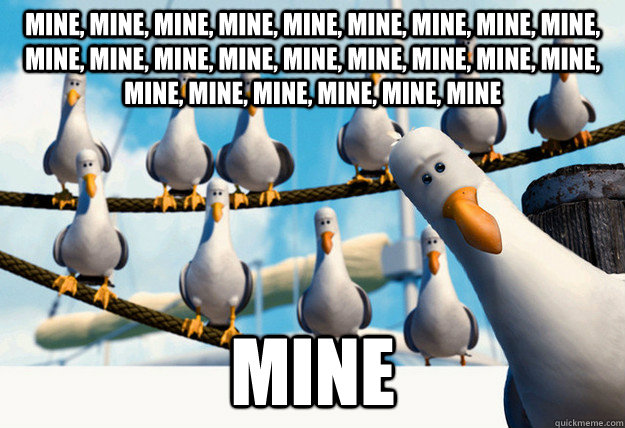
Today, I'm going to explain what it's like to live in the village in Fiji. Mostly, it feels a lot like this... but replace "Mine" with "Kelli"... Mostly, it's the little kids that wander around SCREAMING MY NAME. KELLI, KELLI, KELLI, KELLI, KELLI, KELLI, KELLI (As I silently pull my hair out)!!!


I joke with my neighbors that my house is "America," because I don't always follow all the Fijian rules. For example, we bend over and say "tu-lo" as a sign of respect when crossing a room and you leave your shoes off before entering a room.  We sit on the floor, criss cross applesauce style, instead of in chairs. There's about a thousand more small things that we do differently, but here are a few.

In Fiji, when someone invites you to tea, or for a meal, it's considered rude to not accept because it says something negative about that family. If I wanted, I could walk around and never have to cook my own food. I don't do that 1) because I don't want to abuse the privilege, 2) the more I eat at other peoples' houses, the more likely I am to get sick, and 3) I enjoy cooking. This has taken time and patience to communicate to my neighbors. A traditional Fijian meal will be: fish, cassava, dalo/taro, coconut milk, lime/lemon, chilis, fresh tropical fruits, fresh tropical vegetables, corned beef, bread, ramen, potatos, curry, or rice.

Traditional Fijian Food

One of the other differences is privacy. Living in a bamboo thatched house with open windows often means that I have very little privacy. When I'm alone, my villagers think that I am lonely. I've had to explain several times that I lived by myself for years before I joined Peace Corps. It's not as normal in Fiji for young adults to move on their own; even college students will live at home and take transportation! There is always something to do in the village. The little kids come over a lot to work on their homework and they are rewarded with time to spend playing on my electronics. 

Using fruit to learn addition and subtraction

Women always wear skirts in the village. If I go to town, I have to put a sarong over my pants and same is true for my swimsuit when going to resorts. Men wear a pocket sarong, called a sulu; I've heard it's very comfortable. There's also always loud music and yogona, also known as kava and grog. They have music, dancing and grog going until very late in the night sometimes. Grog tastes a little like what would happen if you made tea out of dirty potpourri (it's not my favorite). 

Traditional Yagona Ceremony

Even though everything is crazy different, I am used to it now and often it takes other foreigners reminding me about how different my life really is because it is my new normal. If you have any questions or ideas for blog posts, then please let me know below!


Sunday, July 3, 2016

Why You Should Join Peace Corps with a Masters or PhD

There's an article on the Peace Corps Blog Here about "Why You Should Join the Peace Corps Straight Out of College." Well, they aren't wrong, per-say, but I wanted to add my reasoning to why you should join the Peace Corps right after your higher level degree. Peace Corps has a tendency to be marketed to recent college graduates with new undergraduate degrees. Yes, all of the things listed are 100% true, but I'm going to expand a little bit on why you are not overqualified simply because you have a master's or PhD.

Here is their list: 

  • You have the opportunity to be immersed in another culture
  • You will constantly be challenged and find new opportunities to grow
  • You have a safety net
  • New group of friends
  • You might actually make a difference
  • Build your resume 
Here is my additional list:
  • You have bigger insight and self-awareness: This is not to say that most undegraduates do not, but you typically are simply going to have seen more of the world and that makes you more accepting that opinions are opinions and not facts. Now, I've seen some PCV's with just an undergrad totally knock other's with higher education out of the park, so it's not always true. 
  • You have more knowledge: You studied in your preferred field as a specialty! This makes you more of an asset and you understand your subject at a deeper level.
  • You are very passionate about your subject: when you don't have to take general education classes, it means that you can pick something that you truly enjoy. Because of this, you know more of what you may want in your life. While, that isn't always true, it is for the Peace Corps. Having a specialized degree can help you can access to coveted positions. 
  • You already have experience: there are two benefits to this... 1) Peace Corps changed their application style, which made each position much more competitive and 2) handling working in America can be hard enough without experience, adding experience means that your adjustment may be more limited to culture. 
  • You LOVE what you do and you know what you want to do: When this happens, you become an advocate for both your government and your field of profession. 
  • Public Student Loan Forgiveness: google this, it's life changing... $0 loan payments!
  • You will be humbled: You will find that every, single thing on this list can come at any degree and experience level. You will learn that education doesn't mean much when you're here for a common goal. I find that while it was a benefit in the application process, we all come in knowing the exact same about being a Peace Corps Volunteer and it is a very humbling experience. Everyone has their own unique schedule for cultural adjustment and education often has nothing to do with that. 
The point of this post is to show that there is just as much to get from this experience as a person with a higher degree as someone with a undergraduate degree. It is worth puting your life and career on hold for a bit! It is one of the best self-awareness experiences that I have ever had (and am still having!)

Have any questions you want answered in a blog post? Comment below and Vinaka Vakalevu!