Tuesday, March 21, 2017

When You're Not the New Kid in Town Anymore...

Life definitely feels different as a second year volunteer. Currently, I'm about 1.5 years into my service, with about 7-8 months left depending on leave and when I close service (COS). Luckily in my group, we have almost everyone still from our PST (Pre-Service Training) group. I'm so blessed to have these volunteers to talk with as life seems to change.

I think the biggest difference between now and a year ago, is that I feel like I (mostly) know what I'm doing and how the culture works. I still make mistakes, but for the most part, these aren't because I don't know Fiji well enough yet (although my year 9 students are very quick to point that out when it does happen!). If you remember the cycle for volunteers, the first year is pretty tumultuous with lots of ups and downs in your service. While the second year is (ahem, usually) fairly stable in being positive. I still find that online people and problems back home cause the biggest hurdles for me, personally. It's very rarely a problem here that is causing my mental stress, with the biggest exception being grant-writing, which is a huge, but necessary headache.

I understand how the school works. I know the paperwork, I understand the culture, I know what I'm allowed to teach and for the most part, know which teaching methods work best. I also understand that they are young students and can be distracted by anything. For example, last week we had someone come and cut trees. I lost an entire class for that because my students could not concentrate, but I would hazard a guess that students in the states would have a problem with that too.

Teaching Year 13 FLE

I feel less of a need to reinvent the wheel and more of a need to push just a little on barriers. For example, when I taught last year, I wanted to be unique, inspiring and have everything be based in music or the arts. This year, I teach using a mostly Fijian style and incorporate the arts where I can because I feel like this is more realistic for my fellow teachers. As a volunteer, I'm here for the students, but I'm mostly here for the teachers. I also have willingly taken on more responsibilities at school. Last year I was just trying to figure out what I was doing and when!

This year there's more of a focus on sustainability. It's not just about me, it's about passing the knowledge on and making sure the community wants it. If I have a great idea, but my community doesn't really care, it doesn't mean that I do this idea anyways, but try to find another idea that my community is interested in. It's been very real that I am leaving at the end of this year. I have to find ways to transfer knowledge.

Several of my "unofficial counterparts" at School

In Peace Corps, we are each given a "fijian counterpart," or someone who does exactly what we do, but is a local. I have counterparts in the village and school, both official and unofficial. As a second year volunteer, I've really started to learn that the real work is with my unofficial counterparts. They are the people who have chosen to work with me and bought into the idea of sustainability. My given counterparts are often extremely busy, and while they help when they can, they don't always have time. This took a lot of acceptance on my part and explaining. I'm still working on this. I made the mistake of teaching all the classes last year and this year it has been difficult to incorporate sustainability into that model because sometimes they don't understand why I won't just teach classes.

I feel more integrated into my village. I'm comfortable doing traditional chores, while I'm still comfortable saying no and pushing the boundaries. I also have a lot more going on with projects both in the village and the school. My friends are more Fijians than fellow PCV's. I love to play with the kids and feels less like I am working all the time. It's become my relaxing zone, even if it means the kids want help with their homework on saturday and I just want to hide in my house all day. It just feels more like home.

Swimming in the River

The other change is that my friends back in the states are constantly asking me what my next step is because Americans just tend to be like that. I can't really apply for a job this far in advance, but I have an idea on what I'm looking for in a job. Honestly, the current political system makes me unsure as to how that will happen with a federal hiring freeze, but I'm trying to be positive. I'm hoping to find a job with either the government or non-profit that has the ability to incorporate music therapy techniques with social justice, gender empowerment, youth empowerment and/or trauma. Preferably near North Carolina, Georgia, or the rest of the east coast because my parents are out there now. I know the right job will happen because Peace Corps happened at the right time. I would be interested in an overseas job if it met the requirements for Public Student Loan Forgiveness. Only time will tell!
Question for RPCV's how long did it take you to find work after you returned?

Do you have any questions about being a second year volunteer? Would you like to see a blog post on something specific? Please leave a reply below and I will answer!

Wednesday, February 1, 2017

I'll Be Home for Christmas 2016

I had the amazing opportunity to visit my home for an entire month over the holidays. I was able to see my friends, former professors, sister, grandparents, cousins, aunts, uncles and parents. It's funny how time just keeps going and relationships pick up right where you left off.

I've practically been planning this trip since before I left for Fiji originally and there was a lot of expectations built into it. The weeks leading up to the trip were some of the busiest I've had in a long time. I had the end of the school year functions, mid-service training conference for my group's one year mark in Fiji, and Camp G-Glow on the Yasawa Islands. It was a rush and I really didn't even have time to think about going home until I was on my way back from the Yasawas on a fiber boat.

After being in country for over a year, I felt very adapted. Fiji felt normal; it was my normal. There are certain bonuses to being out of the country and literally, on an island an ocean away from America. I can ignore the news from back home if I want by simply turning off facebook and twitter. I can pretend the stuff that is really bad at home, isn't as bad as it is by focusing on my community. In certain ways, life is easier... I don't have to pay utilities, bills, insurance, housing or etc. Finally, life is slower and unplanned. Americans tend to plan every minute of the day and future to the point where caffeine becomes a dependency instead of a luxury. In a sense, you become numb or opposed to a lot of the things that you originally loved as an American.

It was really hard to leave Fiji because these people have become my family. I'm always afraid of offending my blood family by saying that, but I'm starting to realize that they understand, or at least are trying to because they love me. Even in the airport, you feel different because you are not used to the luxury. You stand out because you can speak the local language, but you are not from Fiji.

Welcome Home!

Arriving in America was surreal, but it was a relief. It's that moment you let out a breath that you didn't realize you were holding. Although, I felt like a foreigner in my own country. From bending over and saying "tulo" (excuse me) to cross rooms  or not needing to where a skirt everywhere, my home country suddenly felt like I didn't belong anymore. Although, man oh man is Mexican food good. Cheese, my goodness I've missed cheese.

My Dad and I at the St. Louis airport

My Aunt Clare and I decorating the Christmas tree

I got home and it was COLD. Mostly, it was the lack of humidity that was bothering me (Fiji's lowest humidity that I've seen is about 50%). I didn't have to walk outside to use the bathroom or check for bugs in my bedding at night. It was easy, but still a little weird. As time went on, I had the opportunity to see a concert, my best friend and my grandparents. My granddad gave me a travel size fishing pole that I am super excited to try and use.

My Cousins from my mother's side-Kip, Kailey, Me and Sister (missing Kenna!)

My grandparents and I
My family wanted everything to be perfect and I will forever thank them for that. Spending time with people is what makes it perfect, not the "stuff." Everything was perfect! I ate so much food... bacon, macaroni and cheese, smoothies, blackberries, raspberries, strawberries, carrot cake, lasagna, venison chili and so much more. It was so amazing! I made Fijian curry for my family for Christmas. I visited my cats and was happy they remembered me. I also got to see my good friends who have had babies. I tried to squeeze as much love into those visits as I could because they'll probably be walking the next time I see them.

QUESO!

My cat, Symphony

The visit with my mom meant that I got to meet my stepdad and stepsister. It was incredible and I am so glad that my mother is happy. Plus, she made all my favorite foods and decided it was my "birthday" because she wouldn't see me for my actual birthday. We had amazing long talks and I feel so connected with my mom, more than ever before. I loved spending so much time with my sister throughout the month. She's one of my best friends, even if we argue, haha. It was so nice to dress up, do my hair and make up... then not sweat it off.

My stepdad, Tim and I
My Mom and I
I finally had adjusted; it was home...and then it was time to go back. I spent the entire night before packing and weighing my suitcase... we ended up having to mail a package, but that was cheaper then the overage fees. I do wish I had eaten more chips and queso, but it was relaxing. In a way, it was hard to relax at first because I kept feeling like I should be in my village, but I also had to remember that I am an American and this is my home. Fiji is temporary and it will be a part of my life forever, but it is not a struggle that I will have my whole life.

That gave me the positive feelings that I needed to come back. This struggle is temporary. It is 100% the hardest thing that I've ever done in my life, but it is also the best thing I have ever done in my life. Going into the Peace Corps forced me into a new lifestyle. I have a better work/life balance now.

Before my trip home, I was so sure that I wanted to do another term... but now I'm not so sure. America is home and being there reminded me how hard it is to be in Fiji. I'm sure that I will adjust back to it, but in a way it's harder because I didn't have training as a buffer coming back this time. I know for sure, while there is work abroad, there is definitely work to be done at home. I can't ignore that. I am not sure what the future entails, but for now, it means me being in Fiji. I'll figure out the rest as time goes on. No worries, no hurries.

Friday, January 20, 2017

Camp G-Glow 2016: Yasawa Islands, Fiji

In December, right before I went home, I was honored to participate in Camp G-Glow 2016, Guys and Girls Leading Our World, on the Yasawa Islands, Western, Fiji. It was a blast and I am so proud of my students for participating. We learned about leadership, self-esteem, yoga, reproductive health, gender empowerment, teamwork and so much more!  It wasn't easy because we didn't have running water or electricity, but it was so much fun! Instead of a long post, I'm going to insert the video link to facebook.

Camp G-Glow 2016 Video

Music Credit*
MC: March into the Sea by Twenty-one Pilots
Kings Without Crowns by Matisyatu
Happy by Pharrell Williams
Counting Stars by One Republic
Lights by Ellie Goulding
Born This Way by Lady Gaga

*music was used for educational purposes only and no copyright infringement was intended. Camp G-Glow Themesong may not be copied or used without permission from the blogger.

Photo and Video Credit:
Sunny Liu


Practicing the Camp G-Glow Themesong

Tuesday, October 4, 2016

Long Overdue Post

My apologies for the wait in between posts! Since I last updated, I have...

  • Seen Fiji win it's first gold
  • Had to explain another mass shooting in class
  • Done a two-day workshop for Reproductive Health and Family Planning services of Fiji on "Therapeutic Use of Music"
  • Watched classes wind down because of exams
  • Seen the new group come to training
  • Hit my 1 year anniversary of being in Fiji
A lot has happened between now and then!

Seeing Fiji win it's first gold was something out of a movie, and honestly, I hope they turn it into a movie one day. Knowing everyone in Fiji was watching TV for those thirty minutes, was insane.  Yes, people literally partied in the streets! When you are a small country, you don't often get the public marketing that the big countries get. Most people only know Fiji has resorts. 

It also was a time to process that the olympics are sorely geared towards first world countries. Most countries simply don't have the budget to spend millions on olympic sized sports arenas. They may not have clean water or enough food. They may have to train on dirt roads or sandy beaches. While it makes for a good story, it definitely shows how much the Olympics are set up for countries like the United States to win. A country that is around 500 times smaller than the United States and with a much smaller budget, has nearly no chance of winning. Think of how much sports stars make in the US... The Fiji olympic team got $3,000USD EACH for winning the gold- and they were happy! 

-------------------------------------------------------------------------------------------------------------------

I hate explaining mass shootings. The kids here just don't understand it because there are no guns in Fiji except for the army. On one side, the kids kind of idolize guns, but on the other side of the equation, they have no way to find guns to play-act with. It's shameful and demoralizing. I absolutely hate it. I can't explain why people hate each other so much or why our government can't learn to compromise. I don't understand it either. I just hope that I make a small difference for the better, where I am able to do so. 

-------------------------------------------------------------------------------------------------------------------

I put on my first workshop for the certificate of the therapeutic use of music for Reproductive Health and Family Planning Services of Fiji. I am excited! They are basically planned parenthood of Fiji. The workshop included information on what is music therapy, the qualifications needed in the USA and Australia, family and client centered care, music terminology, and use of music with children and adults. I learned a lot and am looking forward to updating the certification to be more Fiji-based. 

I got responses from my evaluations like "all ministries should have this workshop." Stuff like that is why I am here. International advocacy for the therapeutic use of music and music therapy. It still gives me warm fuzzies. 

-------------------------------------------------------------------------------------------------------------------

My classes are winding down because it is exam time. Unlike in the US, where exams are nearly a portion of your grade and government exams mean nothing to your personal grade, exams here are 100% of my students grades. These exams were modeled off the Australian testing system. 

Less time with my students, means I have been spending more time in training with the new volunteers. It is absolutely insane that I am considered one of the older volunteers. This past year has had a crazy amount of personal growth. I feel like a more confident, natural version of me. I am stronger than ever before and I can accomplish goals that I never thought were possible. I have learned a new culture and occupation. I wasn't a teacher before! I have learned how to have a garden and do things the "old-fashioned way," as my grandfather says. Yes, I take a bucket and wash my laundry completely by hand with a scrub brush and washing board. Have you ever wanted to time travel? Just join the peace corps! 

I can't wait to see what this next year has in store for me. I feel like I have finally got my "Fiji-legs" and am starting to get rolling on my projects here. And before anyone asks, no, I have no idea what I am doing next besides finding a paying job that qualifies for PSLF. 

Vinaka vaka levu! 

Wednesday, July 20, 2016

You Can't Have Any Pudding, If You Don't Eat Your Meat (Pink Floyd)


Schools. Koronivuli. In the United States, we are used to elementary schools, middle schools and high schools. In Fiji, there are primary schools and secondary schools; many times the secondary schools are referred to as "colleges." Universities typically go by the term "tertiary" or "uni." Unlike the US, all schools in Fiji are religious in some way, but they are not all Christian. There is no separation of church and state in Fiji. 

If you have ever read Harry Potter, by JK Rowling, you'll be familiar with the terms prefect, head girl and head boy. The school system here uses those terms because Fiji was colonized by the British; they follow the British/Australian systems for school. The schools are divided into primary, classes 1-8, and secondary, classes 9-13. When they get to year 7, they begin Form 1. Kindergarten is not mandatory, yet, but there is a movement to make them mandatory. Year 13 is also the same as a first year, university student. 

There are often very little resources, not enough textbooks, supplies or computers; the teachers have to make do with 1 chalkboard per class. The teachers (qasinivuli) are amazing here! They are under strict guidelines from the Ministry of Education on how much paperwork they have to complete and are under a lot of pressure to have students pass the end of year exams. I have a ton of respect for my fellow teachers.

The end of year exams are the only grades students get; they are also modeled off the Australian exams. As you can imagine, behavioral management is often not as good as it could be because there is very little motivation for the students to come to school or behave. The downfalls and lack of attendence are complex and many times, culturally ingrained. However, this doesn't mean that the students or school is behind, just that their ways of doing things are different.

The roles in the village (chief, pastor, fisherman, craftsmen, village spokesmen, and more) often play out in the classroom. My students from the "spokesmen's" family, for example, seem to enjoy talking. My students from the "craftsmen's" family are very good with their hands and kinesthetic learners. My students eat fish and cassava along with other traditional Fijian dishes for lunch (vakasigalevu). My students say "Tulo" when walking around the class if there are other students sitting as a sign of respect and many of them come to school with no shoes! Because there are two big cultures in Fiji, when you get a cross between teacher and students, there can be some troubles. More often than not, there are no problems, but occasionally, the history of the Indo-Fijians and Itoukei plays out in class by students acting out.

I find it all very fascinating. It's taken me a while to realize that just because my students don't measure up to my westernized ideals of music, education, critical thinking and more, doesn't mean that they are doing things wrong... What they are doing, is just right for Fiji and just like everywhere else in the world, there could always be improvements.

Even more, my students excel at things that I'm not sure American children could ever do by themselves! They take care of the entire school grounds: painting, grass cutting, gardening, cleaning, trash clean up, trash burning and more (meanwhile, I still have never mowed the lawn...). They ride public busses, by themselves, to get to-and-from school. They play rugby, cross country and netball instead of traditional American sports. They share their lunch of traditional foods between each other. They can go to town by themselves to do shopping. I'm not sure what my reaction would have been as an elementary school student if you told me I had to help cut the grass. What are your questions for my students or questions for me about my school?

Year 10 students working in a classroom
Nasikawa Vision College students maintaining the grounds


NVC chapel service

View of Nasikawa Vision College from Queens Road

Thursday, July 14, 2016

Village Life; Bula Ni Koro

I have to apologize for my lack of posting lately. I was sick, then went to the capital for some doctors' visits, went the Embassy Fourth of July party, had visitors at the school from Korea, and then was sick again. It's been a crazy few weeks over here!

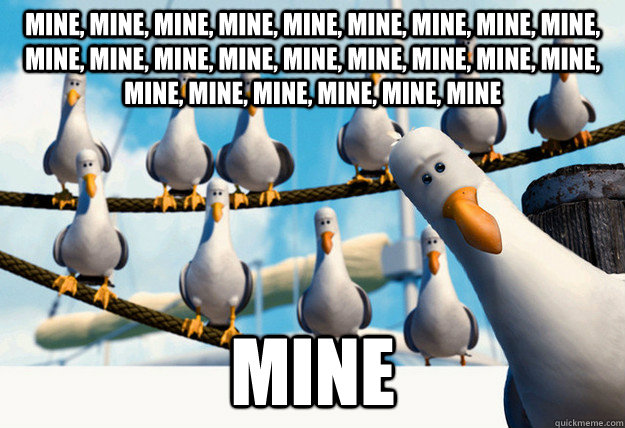
Today, I'm going to explain what it's like to live in the village in Fiji. Mostly, it feels a lot like this... but replace "Mine" with "Kelli"... Mostly, it's the little kids that wander around SCREAMING MY NAME. KELLI, KELLI, KELLI, KELLI, KELLI, KELLI, KELLI (As I silently pull my hair out)!!!


I joke with my neighbors that my house is "America," because I don't always follow all the Fijian rules. For example, we bend over and say "tu-lo" as a sign of respect when crossing a room and you leave your shoes off before entering a room.  We sit on the floor, criss cross applesauce style, instead of in chairs. There's about a thousand more small things that we do differently, but here are a few.

In Fiji, when someone invites you to tea, or for a meal, it's considered rude to not accept because it says something negative about that family. If I wanted, I could walk around and never have to cook my own food. I don't do that 1) because I don't want to abuse the privilege, 2) the more I eat at other peoples' houses, the more likely I am to get sick, and 3) I enjoy cooking. This has taken time and patience to communicate to my neighbors. A traditional Fijian meal will be: fish, cassava, dalo/taro, coconut milk, lime/lemon, chilis, fresh tropical fruits, fresh tropical vegetables, corned beef, bread, ramen, potatos, curry, or rice.

Traditional Fijian Food

One of the other differences is privacy. Living in a bamboo thatched house with open windows often means that I have very little privacy. When I'm alone, my villagers think that I am lonely. I've had to explain several times that I lived by myself for years before I joined Peace Corps. It's not as normal in Fiji for young adults to move on their own; even college students will live at home and take transportation! There is always something to do in the village. The little kids come over a lot to work on their homework and they are rewarded with time to spend playing on my electronics. 

Using fruit to learn addition and subtraction

Women always wear skirts in the village. If I go to town, I have to put a sarong over my pants and same is true for my swimsuit when going to resorts. Men wear a pocket sarong, called a sulu; I've heard it's very comfortable. There's also always loud music and yogona, also known as kava and grog. They have music, dancing and grog going until very late in the night sometimes. Grog tastes a little like what would happen if you made tea out of dirty potpourri (it's not my favorite). 

Traditional Yagona Ceremony

Even though everything is crazy different, I am used to it now and often it takes other foreigners reminding me about how different my life really is because it is my new normal. If you have any questions or ideas for blog posts, then please let me know below!


Sunday, July 3, 2016

Why You Should Join Peace Corps with a Masters or PhD

There's an article on the Peace Corps Blog Here about "Why You Should Join the Peace Corps Straight Out of College." Well, they aren't wrong, per-say, but I wanted to add my reasoning to why you should join the Peace Corps right after your higher level degree. Peace Corps has a tendency to be marketed to recent college graduates with new undergraduate degrees. Yes, all of the things listed are 100% true, but I'm going to expand a little bit on why you are not overqualified simply because you have a master's or PhD.

Here is their list: 

  • You have the opportunity to be immersed in another culture
  • You will constantly be challenged and find new opportunities to grow
  • You have a safety net
  • New group of friends
  • You might actually make a difference
  • Build your resume 
Here is my additional list:
  • You have bigger insight and self-awareness: This is not to say that most undegraduates do not, but you typically are simply going to have seen more of the world and that makes you more accepting that opinions are opinions and not facts. Now, I've seen some PCV's with just an undergrad totally knock other's with higher education out of the park, so it's not always true. 
  • You have more knowledge: You studied in your preferred field as a specialty! This makes you more of an asset and you understand your subject at a deeper level.
  • You are very passionate about your subject: when you don't have to take general education classes, it means that you can pick something that you truly enjoy. Because of this, you know more of what you may want in your life. While, that isn't always true, it is for the Peace Corps. Having a specialized degree can help you can access to coveted positions. 
  • You already have experience: there are two benefits to this... 1) Peace Corps changed their application style, which made each position much more competitive and 2) handling working in America can be hard enough without experience, adding experience means that your adjustment may be more limited to culture. 
  • You LOVE what you do and you know what you want to do: When this happens, you become an advocate for both your government and your field of profession. 
  • Public Student Loan Forgiveness: google this, it's life changing... $0 loan payments!
  • You will be humbled: You will find that every, single thing on this list can come at any degree and experience level. You will learn that education doesn't mean much when you're here for a common goal. I find that while it was a benefit in the application process, we all come in knowing the exact same about being a Peace Corps Volunteer and it is a very humbling experience. Everyone has their own unique schedule for cultural adjustment and education often has nothing to do with that. 
The point of this post is to show that there is just as much to get from this experience as a person with a higher degree as someone with a undergraduate degree. It is worth puting your life and career on hold for a bit! It is one of the best self-awareness experiences that I have ever had (and am still having!)

Have any questions you want answered in a blog post? Comment below and Vinaka Vakalevu!